
Sourcing Knit Jacquard Fabric directly from manufacturers gives wholesalers, apparel brands, and importers several clear advantages: lower cost per meter, better quality control, faster sampling, stronger customization, and more reliable supply planning. When you work with the factory instead of multiple trading layers, communication becomes shorter, technical decisions become clearer, and production risks become easier to manage. This matters in fashion and textile sourcing because even a small mismatch in weight, color, or stretch can affect hundreds or thousands of finished garments. Direct sourcing also helps buyers align fabric development with actual end use, whether the target is dresses, tops, lounge sets, or fashion basics. Because the knitting team and finishing team are closer to your request, so they can adjust details like yarn composition, pattern scale, hand feel, and width with fewer delays. Because pricing is discussed at the production level, so buyers often gain more transparency on minimum order quantities, lead times, and testing options. For companies preparing collections in 2026, direct manufacturer sourcing is one of the most practical ways to build a more responsive, cost-aware, and stable fabric supply chain.
TL;DR
- Cost savings: Direct factory sourcing can reduce layered markup by 5 % to 20 % per order, depending on volume and complexity.
- Lead time control: Sampling and bulk planning may move faster by 7 days to 21 days when communication goes straight to production teams.
- Customization depth: Buyers can specify 3 to 8 technical variables such as GSM, width in cm, pattern, stretch, and finishing.
- Quality consistency: Direct review of lab dips, strike-offs, and bulk standards can cut avoidable variation across 1000 m to 10000 m runs.
- Inventory planning: Clearer MOQ and replenishment schedules support smarter purchasing over 4 quarters to 12 months.
What Makes Knit Jacquard Fabric Attractive for Wholesale Buyers?
Knit Jacquard Fabric stands out because it combines the comfort and flexibility of knitted construction with the visual richness of engineered patterns. Unlike printed fabrics, jacquard effects are built into the fabric structure itself, which can improve depth, texture, and design durability. For wholesale buyers, that means a stronger balance between performance and appearance.
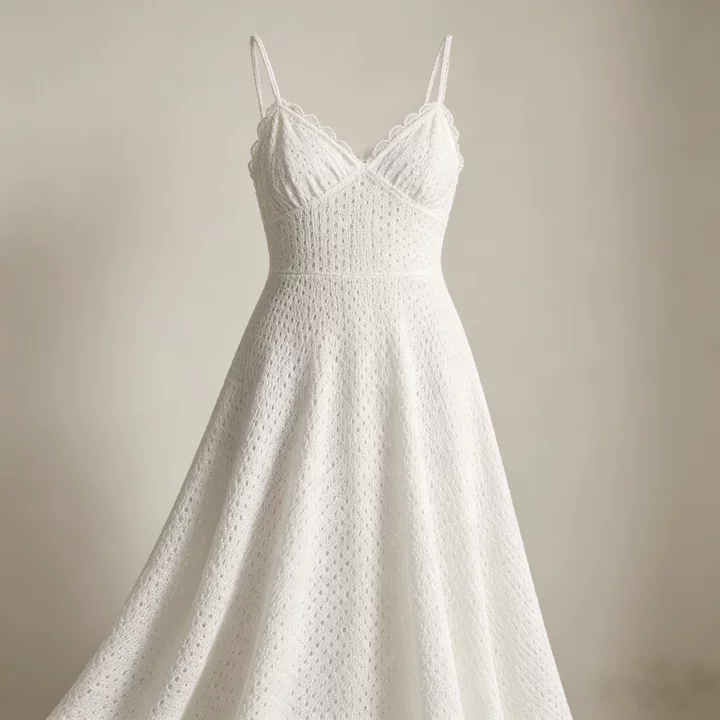
In commercial terms, Knit Jacquard Fabric works across multiple categories. It can suit women’s dresses, tops, skirts, layered fashion, children’s garments, and some soft home-textile applications. Because the fabric can be developed in different blends such as polyester, rayon, cotton, or spandex mixes, so buyers can match the material to price targets and comfort goals more easily.
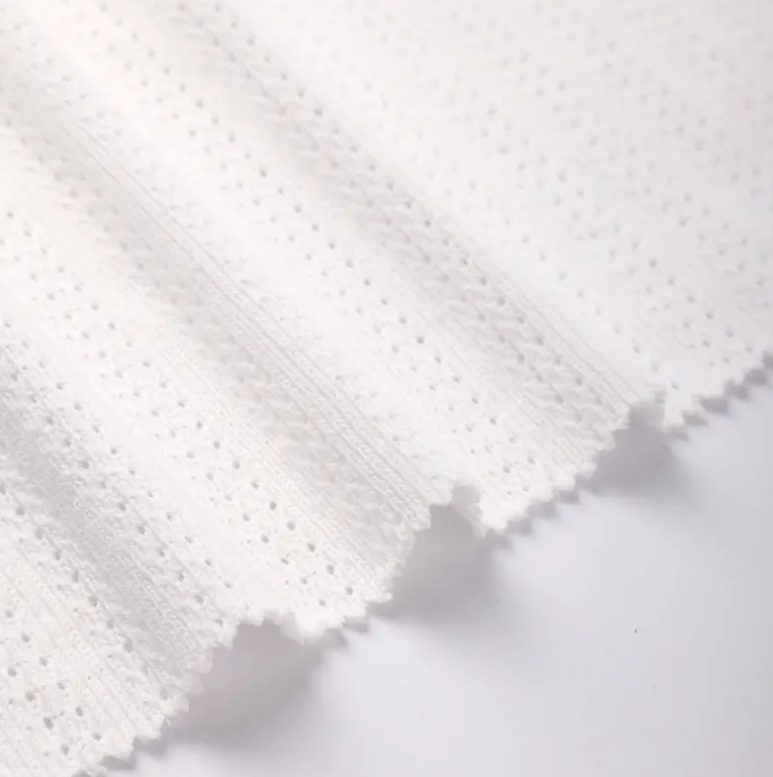
If you want to review category options, you can explore this collection of Knit Jacquard Fabric. For a more specific example, this white CVC hacci rib jacquard knit fabric shows how pattern, rib structure, and dress-focused use can come together in one product direction.
1. Lower Total Sourcing Cost
The most obvious benefit of buying direct is cost efficiency. Every extra intermediary in the chain usually adds margin, delays, and communication steps. With direct manufacturer sourcing, buyers can discuss yarn choice, knitting complexity, dyeing, finishing, packaging, and shipment terms in one conversation. That often leads to more accurate cost building.
Lower cost does not only mean a cheaper price per meter. It also means fewer hidden losses. Those losses often come from incorrect sampling, inconsistent color approvals, late changes, and delivery misunderstandings. Because technical details are confirmed closer to production, so errors can be identified before they turn into bulk waste across 3000 m or 5000 m.
Practical takeaway: A direct quote may help buyers compare fabric price, sampling fee, dye lot planning, and MOQ in one structured way instead of receiving fragmented information from multiple channels.
2. Better Quality Control from Yarn to Finishing
Quality consistency is one of the biggest reasons professionals prefer factory-direct relationships. Quality control in knitted jacquard is not just about appearance. It includes loop formation, pattern definition, elasticity, recovery, fabric weight, dimensional stability, and finishing performance after washing.
When you deal directly with a manufacturer, you can ask focused questions about:
- Yarn composition in percentages
- Fabric weight in g/m²
- Width in cm
- Shrinkage tolerance in %
- Colorfastness test expectations
- Stretch and recovery targets
- Finishing methods for hand feel and drape
Because the manufacturer controls knitting and finishing stages, so it becomes easier to trace the source of a problem if a sample does not meet expectations. That traceability can save significant time during development cycles of 2 weeks to 8 weeks.
3. Faster Sampling and Bulk Approval
Speed matters in wholesale textiles. Fashion calendars are short, and delays at the fabric stage can push garment production off schedule by 14 days or more. Direct communication with a manufacturer shortens the route between the buyer and the technical team handling knitting, dyeing, and finishing.
Instead of sending requests through several parties, brands can often approve knit structure, jacquard pattern, and color references more quickly. Because requests move straight to the responsible team, so sampling revisions can happen with fewer repeated explanations. This is especially valuable when working on seasonal programs or repeat orders where consistency is essential.
Faster approvals also support more realistic launch plans. If a brand needs 2 sample rounds instead of 4 rounds, the timeline becomes easier to manage and air shipment risk can be reduced.
4. Stronger Customization for Market Differentiation
One of the strongest advantages of direct factory sourcing is custom development. Wholesale buyers often need fabrics that fit brand identity, target price, and end-use performance at the same time. With Knit Jacquard Fabric, customization can include pattern geometry, rib combinations, yarn blend, visual texture, and softness.
Manufacturers can frequently adapt:
- Pattern scale in mm or cm
- Fabric weight from lighter to heavier g/m² ranges
- Color combinations for seasonal palettes
- Stretch level with elastane content
- Surface feel through brushing or finishing
- End use for dresses, tops, or loungewear
Because the producer understands machine limitations and possibilities, so they can recommend practical adjustments before development costs rise. This helps buyers protect both creativity and commercial viability.
5. Clearer MOQ and Production Planning
Minimum order quantity is often a deciding factor in textile sourcing. Trading layers may provide less precise information because they depend on upstream confirmations. Manufacturers, by contrast, usually know their actual machine efficiency, dye lot requirements, and scheduling windows.
That makes planning more accurate. A buyer can determine whether a style should be ordered in 500 kg, 1000 kg, or another production unit based on realistic factory terms. Clear MOQ guidance also helps with color selection. Instead of spreading volume over too many shades, brands can focus on the strongest 3 colors to 5 colors and improve price efficiency.
Production planning becomes even more important for repeat business. If a style performs well, a direct relationship can make replenishment smoother because previous specifications and approvals are easier to reference.
6. Improved Communication on Technical Details
Textile sourcing is full of details that sound small but matter a great deal in bulk orders: GSM shifts, hand feel, loop clarity, dye depth, width tolerance, and wash behavior. Technical clarity improves when buyers can speak with the people who actually understand machine setup and finishing behavior.
A direct manufacturer can discuss whether a requested pattern will affect stretch, whether a heavier yarn will reduce drape, or whether a brushed finish may change the final weight by a few g/m². Because these discussions happen at the technical source, so decision-making is more practical and less speculative.
Communication accuracy is especially valuable for importers who manage container planning, multi-style programs, and strict delivery windows.
7. More Reliable Supply Chain Stability
Supply chain reliability is not just about whether goods ship on time. It is also about whether goods arrive with the expected quality, packing standard, and documentation. Working directly with a manufacturer usually gives buyers better visibility into capacity, production sequence, and likely bottlenecks.
Supply chain stability matters even more in 2026, when many brands are trying to control inventory without losing responsiveness. Direct sourcing can support this balance because forecasting conversations become tied to real production conditions, not assumptions passed through several channels.
Because the manufacturer can explain actual machine allocation and finishing timing, so buyers can build smarter calendars for launch dates, replenishment windows, and shipment bookings over 6 months to 12 months.
8. Easier Problem Solving When Issues Arise
No sourcing process is perfect. A color may drift, a pattern may look different at scale, or a finish may affect the intended drape. What matters is how quickly the issue is identified and corrected. Direct relationships help here because the response path is shorter.
If a bulk issue appears, the manufacturer can check knitting records, yarn lots, machine settings, and finishing notes more efficiently. This creates a more factual problem-solving process. Corrective action becomes stronger when the people involved are close to the source data.
For wholesale buyers handling large quantities such as 2000 m to 20000 m, even a small improvement in issue resolution can protect delivery performance and customer confidence.
Direct Sourcing vs Indirect Sourcing
| Factor | Direct from Manufacturer | Through Intermediaries |
|---|---|---|
| Price transparency | Usually clearer at production level | Often includes extra markup layers |
| Technical communication | Faster access to knitting and finishing teams | May involve repeated relays of information |
| Sampling speed | Often shorter by several days | Can slow due to multiple approvals |
| Customization | Better control over specs and development | Sometimes limited by channel constraints |
| Issue resolution | Closer to root cause analysis | May take longer to trace responsibility |
| Repeat order management | More direct access to previous standards | Can depend on archived third-party records |
How to Evaluate a Knit Jacquard Fabric Manufacturer
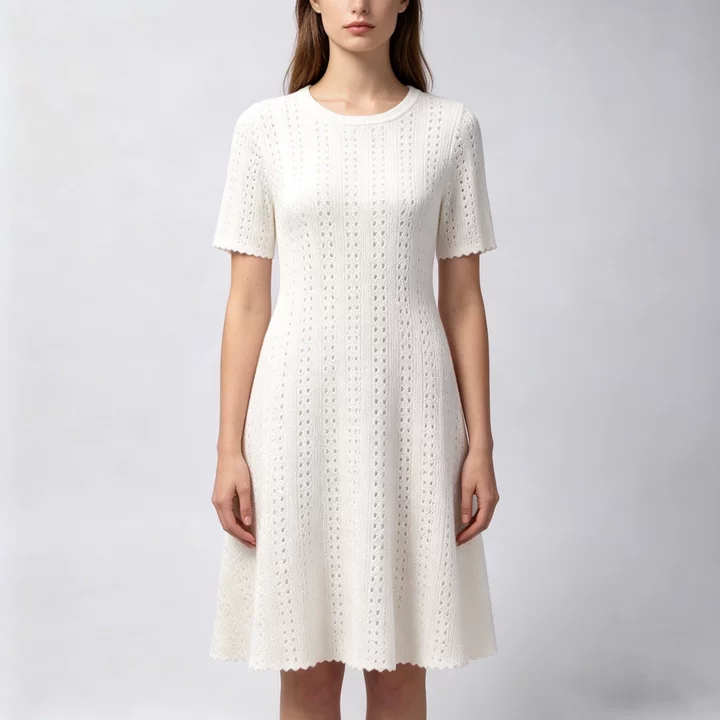
To gain the full benefits of direct sourcing, buyers should evaluate suppliers carefully. A good manufacturer is not only competitive on price. They should also show technical understanding, consistent communication, and stable production processes.
Check the following points before placing a larger order:
- Product range: Can they handle the jacquard structures you need?
- Specification control: Do they provide clear GSM, width, and composition data?
- Sampling process: How many days are needed for development?
- MOQ clarity: Are the minimums given in kg or m?
- Quality records: Can they explain standard inspections and tolerances?
- Communication speed: Do they answer technical questions clearly?
- Bulk consistency: Can they support repeat orders over multiple seasons?
Supplier evaluation should always match your market position. A fashion brand with premium positioning may prioritize hand feel and pattern sophistication, while a volume importer may emphasize price stability and lead time control.
Why Direct Sourcing Supports Better Business Decisions
Direct sourcing creates better decisions because information is less distorted. If a buyer needs to know whether a pattern can be produced at a certain width, whether a blend will meet the target softness, or whether a finish may affect shrinkage, direct access helps answer those questions with more confidence.
Business planning improves when fabric decisions are connected to real factory capability. Because accurate production information is available earlier, so buyers can price garments more realistically, reduce overbuying, and coordinate merchandising calendars with fewer assumptions.
This is especially useful for businesses preparing assortments for Spring 2026, Summer 2026, or year-round replenishment programs.
FAQ
1. Why is buying Knit Jacquard Fabric directly from manufacturers more cost-effective?
It is often more cost-effective because buyers reduce intermediary markups and gain clearer visibility into how the price is built. A direct manufacturer can explain how yarn type, jacquard complexity, finishing, and order volume influence the final quotation. This helps buyers compare options more precisely and avoid paying extra for communication layers that do not add technical value.
2. How does direct sourcing improve fabric quality consistency?
Direct sourcing improves consistency because the buyer can discuss exact specifications with the production team. That includes composition in %, width in cm, weight in g/m², and finishing expectations. When these points are documented and approved at the source, bulk production is more likely to match the original sample standard.
3. Can manufacturers customize Knit Jacquard Fabric for specific collections?
Yes, many manufacturers can customize knit jacquard structures based on pattern design, colorway, blend, stretch needs, and end use. This is valuable for brands that want a unique visual identity or a specific hand feel. Direct development conversations can also reveal whether a design is practical for bulk production before the buyer invests too much time in it.
4. What should buyers check before placing a wholesale order?
Buyers should confirm composition, GSM, width, shrinkage tolerance, colorfastness expectations, sample approval status, MOQ, lead time, and packaging details. They should also make sure the intended end use is clearly stated. For example, fabric for dresses may need a different drape and softness than fabric for fitted tops or loungewear.
5. Is direct sourcing suitable for small and medium brands?
Yes, it can be suitable if the brand plans responsibly and chooses styles with repeat potential. Smaller companies may not always buy the largest volumes, but they can still benefit from better communication, more accurate sampling, and stronger fabric identity. The key is to align MOQ with sales potential and avoid developing too many low-volume variations at one time.
6. How does direct communication reduce delays?
Direct communication reduces delays because questions do not need to pass through several organizations before reaching the technical team. If a sample needs adjustment, the request can go straight to the relevant people handling knitting or finishing. This often cuts unnecessary waiting time and helps the buyer maintain more accurate production calendars.
7. Why is 2026 a good time to optimize fabric sourcing strategies?
In 2026, many apparel businesses are focusing on tighter margins, more disciplined inventory, and more responsive production. Direct manufacturer relationships support those goals by improving transparency, reducing communication lag, and giving buyers better control over the variables that affect cost and delivery. That makes direct sourcing a practical strategy, not just a purchasing preference.
Conclusion
Sourcing Knit Jacquard Fabric directly from manufacturers offers meaningful advantages for wholesale buyers who want stronger control over cost, quality, customization, and lead time. It reduces avoidable markup, improves technical communication, and creates a shorter path from concept to bulk production. Because factory teams understand real production conditions, so they can support more practical decisions on specification, sampling, and scheduling.
For brands, importers, and distributors building textile programs for 2026, direct sourcing is a smart way to improve supply chain confidence while keeping fabric development aligned with actual market needs. Whether your goal is a dependable basics program or a more design-driven fashion collection, a closer relationship with the manufacturer can make the difference between a difficult order and a repeatable success.
Post time: Apr-21-2026