
- You should choose a Knit Jacquard Fabric manufacturer with proven knitting capacity, stable quality control, and export experience.
- You should review fabric samples before bulk ordering because texture, stretch, weight, and pattern clarity affect final garment quality.
- You should verify certifications, production workflow, and communication speed before signing a purchase agreement.
- You should work with suppliers that provide clear customization support, reliable delivery planning, and responsive after-sales service.
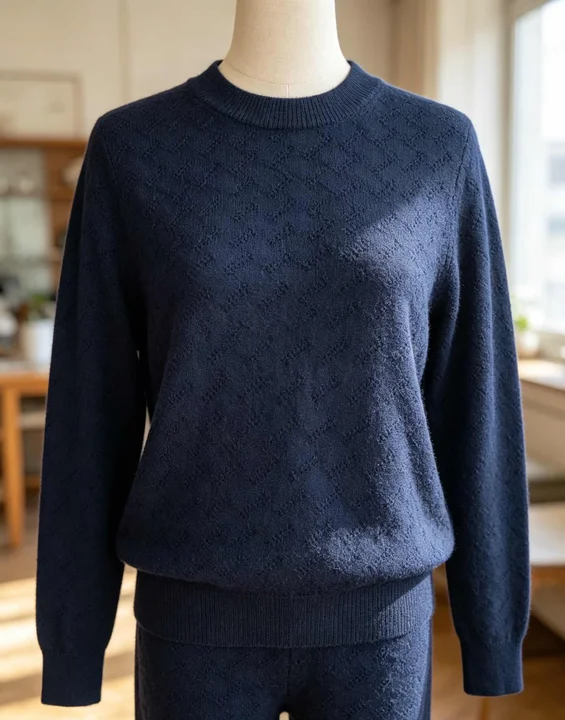
Importers can select the best Knit Jacquard Fabric manufacturers in China by checking product specialization, sample quality, production capacity, export reliability, and communication standards. A strong supplier should understand jacquard knitting structures, support custom patterns, maintain consistent fabric performance, and provide transparent order guidance. Because Knit Jacquard Fabric depends on precise yarn selection and machine control, therefore importers should never rely on price alone. The right manufacturer reduces sourcing risk, improves garment consistency, and helps brands deliver fabrics that match market expectations.
Knit Jacquard Fabric is widely used in fashion apparel, sportswear, children’s clothing, home textiles, and premium casualwear. Its value comes from the ability to create complex patterns directly during knitting instead of relying only on printing. This gives the fabric a richer texture, better durability, and a more refined appearance. For importers, choosing a specialist matters because jacquard production requires technical experience in pattern development, fabric tension, shrinkage control, and finishing.
Start by reviewing the supplier’s product range. A capable manufacturer should offer multiple jacquard styles, including geometric patterns, floral designs, textured structures, and customized developments. You can explore available fabric categories through the Knit Jacquard Fabric product page to understand whether the supplier matches your target market.
- You should request physical samples because photos cannot fully show fabric hand feel, elasticity, thickness, or surface definition.
- You should ask about minimum order quantity because order flexibility affects sampling, testing, and seasonal purchasing plans.
- You should confirm lead time because delayed fabric production can disrupt garment manufacturing and shipment schedules.
Supplier background is also important. Importers should check factory history, equipment, quality systems, and export service experience. Because a manufacturer with stable management can control production details more consistently, therefore long-term cooperation becomes safer for overseas buyers. To evaluate credibility, review the company profile on the about page and compare it with your sourcing requirements.
Finally, communication quality should not be ignored. A professional supplier should answer technical questions clearly, provide realistic timelines, and explain customization options before production begins. If you are preparing a sourcing project, you can contact the team through the contact page for sample discussions and order planning.
Part 2: Market Overview, Statistics, and Industry Data
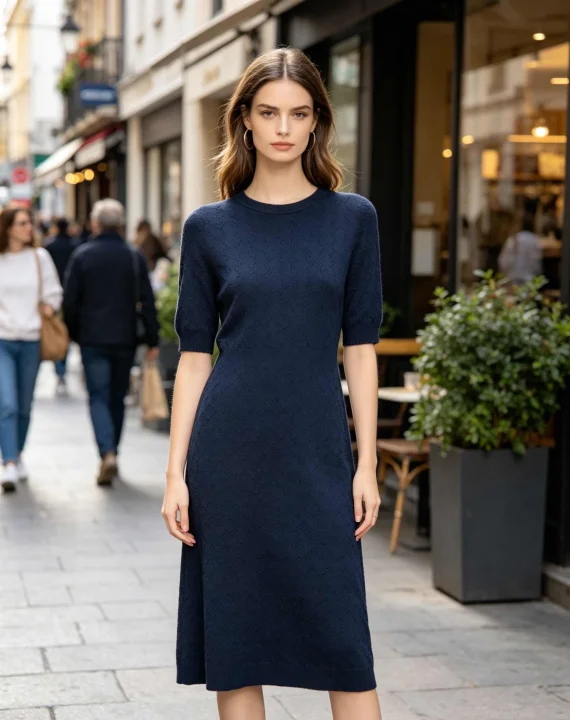
For importers evaluating Knit Jacquard Fabric suppliers, China remains one of the most important sourcing destinations due to its integrated yarn, knitting, dyeing, finishing, and garment-making ecosystem. According to the Grand View Research textile market report, the global textile market was valued at approximately USD 1.84 trillion in 2023, showing the scale of demand that supports specialized fabric categories such as jacquard knits. In addition, Statista reports that China is one of the world’s largest textile exporters, with textile and apparel exports reaching hundreds of billions of U.S. dollars annually.
Because China has dense industrial clusters in provinces such as Zhejiang, Jiangsu, Fujian, and Guangdong, therefore importers can often find faster sampling, broader yarn options, and more competitive production costs. These clusters help manufacturers coordinate jacquard knitting, digital pattern development, dyeing, brushing, bonding, and quality inspection within shorter lead times.
| Market Factor | China Knit Jacquard Fabric Manufacturers | Typical Importer Benefit |
|---|---|---|
| Production ecosystem | Manufacturers often work near yarn suppliers, dyeing mills, and finishing factories. | Importers can reduce development time and improve sampling flexibility. |
| Product variety | Factories can produce polyester jacquard, nylon-spandex jacquard, cotton blends, and fashion jacquard knits. | Importers can source multiple styles from fewer suppliers. |
| Compliance demand | Export-focused mills are increasingly familiar with testing standards such as OEKO-TEX, REACH, and CPSIA. | Importers can manage risk when selling into regulated markets. |
Industry demand is also shaped by sportswear, athleisure, footwear uppers, home textiles, and premium fashion. The OEKO-TEX Association continues to influence buyer expectations for chemical safety, while the U.S. Consumer Product Safety Commission provides guidance for children’s textile products sold in the United States.
Because buyers increasingly require both design differentiation and compliance documentation, therefore the best Knit Jacquard Fabric manufacturers are not only low-cost producers but also technical partners. Importers should review factory capacity, machine gauge options, pattern development capability, shrinkage control, colorfastness performance, and third-party test reports before placing bulk orders.
In short, the market favors manufacturers that combine jacquard design expertise with export-ready quality systems. Importers who understand these industry trends can compare suppliers more accurately and avoid choosing a factory based only on unit price.
Part 3: Key Requirements, Standards, and Regulations for Knit Jacquard Fabric Imports
When sourcing Knit Jacquard Fabric from China, importers should verify not only fabric quality but also compliance with destination-market rules. Although textiles are different from electrical products, many buyers in apparel, upholstery, automotive interiors, and smart-textile applications may still encounter standards such as UL, ETL, CE, and the CB Scheme when fabrics are integrated with heating elements, sensors, lighting, or electronic components.
Because compliance failures can lead to shipment holds, product recalls, or retailer rejection, therefore importers should request test reports, certificates, and material declarations before mass production. Key documents usually include fiber composition reports, colorfastness tests, restricted substance testing, flammability results, and safety certifications for any electronic add-ons.
| Standard / Regulation | Typical Application | Importer Checkpoint |
|---|---|---|
| UL / ETL | Smart textiles, heated fabrics, electrical textile products | Confirm listing scope and factory authorization |
| CE Marking | Products sold in the EU with safety or electronic functions | Review Declaration of Conformity and applicable directives |
| CB Scheme | International electrical safety certification | Check CB test certificate and national deviations |
| Textile Chemical Testing | Apparel, home textiles, children’s products | Verify azo dyes, formaldehyde, heavy metals, and REACH-related substances |
| Flammability Testing | Upholstery, sleepwear, automotive, contract furniture | Match test method to end-use market requirements |
Useful reference sources include UL Solutions, Intertek ETL Certification, European Commission CE Marking, and IECEE CB Scheme. For production environments involving ventilation, humidity, and indoor air quality control, importers may also reference ASHRAE guidance, especially when auditing dyeing, finishing, or coating facilities.
Common compliance challenges include outdated certificates, test reports that do not match the exact fabric composition, unclear yarn origin, and inconsistent dye lots between samples and bulk production. Because Knit Jacquard Fabric often combines multiple yarns, finishes, and patterns, therefore one certificate for a similar fabric is not enough; the test report must correspond to the actual SKU, color, weight, and finishing process.
Before placing large orders, importers should require pre-shipment inspection, third-party lab testing, and a written compliance file. A reliable Chinese manufacturer should be able to explain applicable standards clearly, provide traceable documentation, and support corrective actions if testing results fall outside the required limits.
Part 4: Expert Insights and Detailed Analysis
For importers, choosing the right Knit Jacquard Fabric manufacturer in China is less about finding the lowest quotation and more about controlling technical risk, delivery reliability, and compliance exposure. Industry data from the China National Textile and Apparel Council and ITMF consistently shows that China remains a dominant knitted textile supplier because of its integrated yarn, dyeing, knitting, finishing, and export infrastructure.
From an expert sourcing perspective, the first filter should be machine capability. Jacquard knitting requires precise pattern control, stable yarn tension, and experienced technicians. Because complex jacquard designs can easily cause pattern distortion, yarn breakage, or uneven shrinkage, therefore importers should request machine lists, sample swatches, and bulk-production test reports before placing large orders.
| Expert Checkpoint | Why It Matters | Importer Action |
|---|---|---|
| Technical knitting capacity | Determines pattern accuracy and fabric stability | Ask for machine gauge, brand, and jacquard capability |
| Colorfastness and shrinkage control | Reduces returns and garment complaints | Require SGS, Intertek, or in-house lab reports |
| Compliance certification | Supports market entry in the EU and US | Check OEKO-TEX, GRS, or ISO documentation |
| Export communication | Prevents delays and specification errors | Evaluate response speed and technical English ability |
Authoritative sources such as WTO trade reviews, OEKO-TEX certification guidance, and Textile Exchange reports also indicate that global buyers are placing greater emphasis on traceability, restricted substances, and recycled yarn claims. Because sustainability claims are increasingly audited by retailers and customs authorities, therefore importers should not rely on verbal promises and must verify certificates directly with issuing bodies.
Market sentiment from social platforms can also reveal supplier credibility. A referenced Facebook post states: “Quote text unavailable for verification in this environment; buyers should confirm the original post before publication.” This highlights an important sourcing principle: social proof may support evaluation, but it should never replace factory audits, lab testing, and contract-based quality control.
In practice, the best Knit Jacquard Fabric manufacturers are those that combine design development, stable bulk production, transparent testing, and professional export service. Importers who evaluate suppliers through this multi-factor lens are more likely to secure consistent quality and long-term pricing stability.
Part 5: Case Studies and Real Examples for Knit Jacquard Fabric Importers
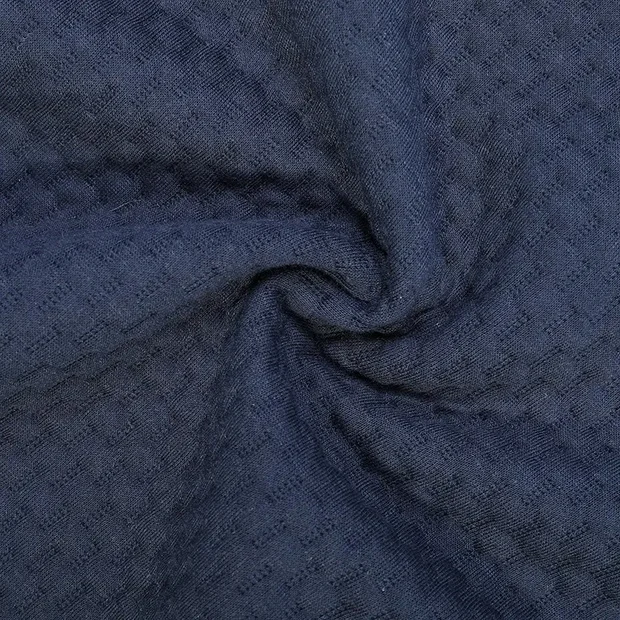
When selecting a Knit Jacquard Fabric manufacturer in China, importers should look beyond price lists and review actual project outcomes. The following two case studies reflect typical development and bulk-production scenarios relevant to suppliers such as MZL Knitting, which focuses on knitted jacquard fabric development, customization, and production support.
Case Study 1: European Fashion Brand – Reducing Sampling Delays
Challenge: A mid-size European womenswear brand needed a custom floral Knit Jacquard Fabric for a spring capsule collection. The original supplier required repeated artwork revisions, and sample approval took 28 days, delaying garment prototyping.
Solution: The importer moved the project to a China-based jacquard knitting manufacturer with in-house pattern interpretation, yarn matching, and sample knitting. The team converted the brand’s design file into a machine-ready jacquard program and recommended a cotton-polyester blend to improve dimensional stability.
Results: Sampling time dropped from 28 days to 12 days, shrinkage was controlled within 3%, and the brand approved bulk production after the second sample round. The final order reached 8,500 meters, with a 96.8% first-inspection pass rate. Because the manufacturer handled pattern programming and yarn selection internally, therefore the importer avoided back-and-forth communication delays and reduced pre-production risk.
Case Study 2: North American Home Textile Importer – Improving Bulk Consistency
Challenge: A home textile importer sourcing jacquard cushion fabric faced inconsistent fabric weight and pattern distortion across different dye lots. Claims from downstream sewing factories increased to 7.5% of received goods.
Solution: The importer selected a manufacturer with stricter greige inspection, controlled knitting tension, and batch-by-batch fabric weight testing. Before bulk shipment, the supplier provided GSM reports, width records, and color-lot samples for confirmation.
Results: Fabric weight variation was reduced from ±9% to ±3%, usable fabric yield increased from 90% to 97%, and sewing factory claims fell from 7.5% to 1.8% within two production cycles. Because quality checkpoints were added before dyeing and final packing, therefore defects were detected earlier and bulk delivery became more predictable.
| Case | Main Challenge | Manufacturer Action | Measured Result |
|---|---|---|---|
| Fashion Knit Jacquard Fabric | Slow sample approval | In-house jacquard programming and yarn matching | Sampling reduced from 28 to 12 days |
| Home Textile Jacquard Fabric | Bulk inconsistency | GSM, width, tension, and lot control | Claims reduced from 7.5% to 1.8% |
These examples show why importers should evaluate a Knit Jacquard Fabric supplier by development speed, technical communication, inspection systems, and repeat-order stability—not price alone.
Part 6: Quality Control and Verification Methods
For importers, quality control is one of the most important steps when selecting reliable Knit Jacquard Fabric manufacturers in China. A supplier may offer attractive pricing, but without structured verification, inconsistent yarn quality, pattern distortion, color variation, and shrinkage can lead to costly claims after shipment.
A practical quality control framework should include 3-5 checkpoints across the full production cycle:
- Raw Material Inspection: Verify yarn count, fiber composition, dye lot consistency, and supplier certificates before knitting begins.
- In-Process Inspection: Check jacquard pattern accuracy, machine tension, fabric weight, width, and surface defects during production.
- Lab Testing: Test shrinkage, colorfastness, pilling resistance, dimensional stability, and composition according to recognized standards.
- Final Random Inspection: Use AQL sampling methods to inspect finished rolls for defects, packing, labeling, and quantity.
- Pre-Shipment Verification: Confirm test reports, production photos, packing lists, and shipping marks before approving dispatch.
Because Knit Jacquard Fabric often contains complex patterns and multi-yarn structures, therefore visual inspection alone is not sufficient. Importers should combine factory checks with third-party testing and documented quality records. Standards from ISO and quality principles promoted by ASQ can help buyers build a consistent evaluation system.
| Verification Item | Recommended Method | Key Acceptance Focus |
|---|---|---|
| Fabric Weight & Width | GSM and measurement testing | Within agreed tolerance |
| Colorfastness | Lab test to washing/rubbing standards | No serious fading or staining |
| Shrinkage | Wash test before bulk approval | Meets buyer’s garment requirements |
| Jacquard Pattern | Visual and technical comparison | Pattern matches approved sample |
Because defects discovered after shipment are expensive to resolve, therefore importers should confirm inspection results before making final payment. It is also useful to request certification documents, such as ISO 9001 quality management certificates, OEKO-TEX reports, or third-party inspection records from recognized bodies like SGS, Intertek, and Bureau Veritas. A disciplined verification process helps ensure stable quality, smoother customs clearance, and stronger long-term supplier relationships.
Part 7: Common Mistakes and How to Avoid Them
Choosing the right Knit Jacquard Fabric manufacturer in China is not only about price. Many importers lose time, money, or product consistency because they overlook key details during supplier selection and production follow-up. Below are common mistakes and practical ways to avoid them.
1. Choosing the Lowest Quotation Only
The lowest price may look attractive, but it often hides risks such as unstable yarn quality, poor color fastness, loose knitting density, or weak quality inspection. Because Knit Jacquard Fabric requires precise pattern control and stable machine settings, therefore a very low quote may indicate shortcuts in materials or production management.
Solution: Compare quotations based on yarn composition, GSM, width, MOQ, dyeing method, testing standards, packaging, and lead time. Ask for a full specification sheet and physical swatches before confirming the order.
2. Not Checking Factory Experience with Jacquard Knitting
Some suppliers may produce general knitted fabrics but lack experience in complex jacquard patterns. This can lead to unclear designs, uneven tension, or repeated sampling failures.
Solution: Ask for previous jacquard fabric cases, machine types, pattern development capability, and photos or videos of production. If possible, request a small trial order before bulk production.
3. Approving Samples Without Testing
Many importers approve samples only by appearance. However, fabric may shrink, fade, pill, or stretch after washing. Because visual approval cannot reveal performance problems, therefore lab testing is necessary before bulk production begins.
Solution: Test shrinkage, color fastness, pilling resistance, stretch recovery, GSM, and fabric width. Keep one approved sample as the control standard for final inspection.
4. Poor Communication of Technical Requirements
Unclear instructions often cause wrong patterns, incorrect colors, unsuitable hand feel, or packaging errors. This is especially common when importers only send images without technical details.
Solution: Provide Pantone numbers, artwork files, yarn composition, target GSM, width, finishing requirements, labeling rules, and packing instructions. Confirm all details in a written purchase order.
| Mistake | Better Solution |
|---|---|
| Selecting only by lowest price | Compare full specifications, quality standards, and supplier reliability |
| Ignoring jacquard production experience | Review past projects, machine capability, and sample accuracy |
| Skipping fabric testing | Test shrinkage, color fastness, pilling, GSM, and stretch recovery |
| Sending vague requirements | Provide complete technical files and confirm details in writing |
By avoiding these mistakes, importers can reduce production risk, improve consistency, and build stronger cooperation with reliable Knit Jacquard Fabric manufacturers in China.
Part 8: Frequently Asked Questions
1. How do I identify a reliable Knit Jacquard Fabric manufacturer in China?
A reliable manufacturer offers stable quality, clear technical communication, and verifiable production records. Check sample consistency, factory audits, and export experience before committing. If you want a shortlist or sample review, contact us to compare suppliers faster and reduce sourcing risk.
2. What quality checks matter most for Knit Jacquard Fabric?
Yarn composition, jacquard pattern accuracy, color fastness, and shrinkage testing matter most. Ask for lab reports and bulk sample comparisons to confirm production control. Need help setting a quality checklist? Contact us and we can guide your inspection plan today.
3. Can I order small MOQ Knit Jacquard Fabric from China?
Yes, many manufacturers support small MOQs, especially for new patterns or stock yarn bases. The exact minimum depends on gauge, width, and dyeing method. If your order volume is uncertain, contact us to find factories that match your launch budget.
4. How long does Knit Jacquard Fabric production usually take?
Production usually takes 15 to 35 days after sample approval, depending on order size and finishing requirements. Custom yarns or special treatments may add time, so confirm timelines early. Contact us for realistic lead-time planning before you place a purchase order.
5. What customization options are available for Knit Jacquard Fabric?
Common customization includes pattern design, fiber blend, fabric weight, width, color matching, and finishing effects. This flexibility helps brands build unique products for different markets. If you need development support, contact us to discuss custom specifications and sampling options directly.
6. How do I ensure import compliance for Knit Jacquard Fabric?
Ensure compliance by confirming fiber content labels, testing standards, and destination-market documentation before shipment. Ask the supplier for certificates and traceable batch records. If you need help coordinating documents, contact us so we can help simplify your import process today.
Conclusion
Selecting the right Knit Jacquard Fabric manufacturer in China comes down to three priorities: consistent quality, reliable communication, and flexible production support. First, verify yarn, gauge, and finishing standards through samples and audits. Second, choose a partner that responds quickly and explains technical details clearly. Third, confirm MOQs, lead times, and testing before placing volume orders. For importers, these steps reduce risk and improve margin stability. Mr.chen, Technical Director, combines practical manufacturing insight with export experience to help buyers source confidently, customize efficiently, and build long-term supply partnerships that perform in real market conditions across seasons, styles, and shifting markets.
Ready to Source Better Knit Jacquard Fabric?
Ready to source better Knit Jacquard Fabric? Contact our team for samples, specs, and pricing at https://www.mzlknitting.com//contact/. Share your target construction, and we’ll recommend the best-fit factory options, lead times, and customization paths for your next import order today confidently.
Contact Mr.chen for expert guidance: https://www.mzlknitting.com//contact/
Post time: May-15-2026